Mera Peak Climbing – 17 Days

17 Days
Duration
Strenuous
Difficulty
The Expedition

Overview

The Mera Peak Climbing – 17 Days is one of the best high-altitude adventures in Nepal, offering trekkers the opportunity to summit Mera Peak (6,476m)—the highest trekking peak in Nepal. This journey combines remote trekking in the Everest region with a rewarding mountaineering experience, making it ideal for those who want to step beyond trekking and enter the world of Himalayan climbing.

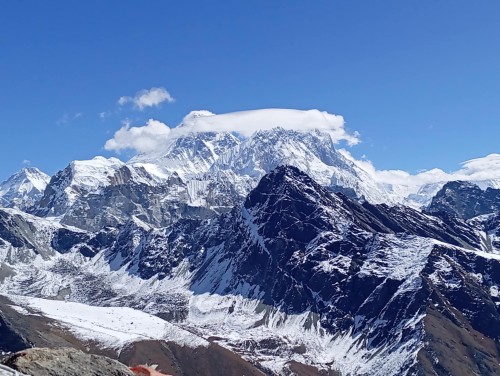
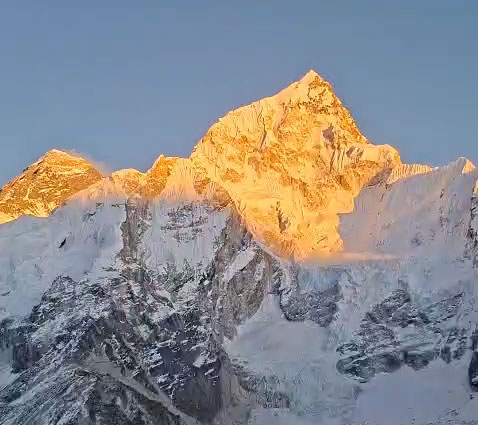
Unlike the crowded Everest Base Camp trail, the Mera Peak route takes you through the quieter and less-explored Hinku Valley, where you’ll walk through dense forests, alpine meadows, and remote villages. The trail offers incredible views of some of the world’s highest mountains, including Everest, Lhotse, Makalu, Cho Oyu, and Kanchenjunga. This sense of isolation and raw natural beauty makes the trek feel more adventurous and authentic.

The itinerary is carefully designed with proper acclimatization days to help your body adjust to the increasing altitude. Before the summit attempt, climbers receive training on using essential climbing gear such as crampons, ropes, and ice axes. Although Mera Peak is technically less difficult compared to other peaks, the high altitude makes it physically demanding. Reaching the summit rewards you with one of the most breathtaking panoramic views in the Himalayas.

Key Highlights of Mera Peak Climbing

  • Climb Mera Peak (6,476m) – Nepal’s highest trekking peak
  • Trek through the remote and peaceful Hinku Valley
  • Enjoy views of Everest, Lhotse, Makalu, Cho Oyu, and Kanchenjunga
  • Less crowded route compared to Everest Base Camp
  • Pre-climb training for safe summit attempt
  • Walk through forests, glaciers, and alpine landscapes
  • Ideal for beginner climbers with good fitness
Daily Path

Endless Discovery

Day 1

Arrival in Kathmandu (1,400m)

Your Mera Peak adventure begins as you arrive at Tribhuvan International Airport in Kathmandu. After landing, you are transferred to your hotel where you can relax and recover from your journey. This first day is mostly about rest and preparation, but it’s also important to organize your trekking and climbing gear, as Mera Peak involves high-altitude mountaineering.

Later in the day, you attend a detailed briefing with your guide. You’ll go over the trekking route, climbing plan, safety procedures, and equipment checklist. This session helps you understand what to expect in the coming days and ensures everything is properly arranged before heading into the remote Hinku Valley.

  • Altitude: 1400
  • Accommodation: Hotel
  • Meals: Breakfast/Lunch/Dinner
Day 2

Fly to Lukla (2,840m) & Trek to Paiya (2,730m)

You begin your day with an early mountain flight from Kathmandu to Lukla, one of the most thrilling airstrips in the world. The flight offers stunning views of hills and snow-capped peaks, giving you your first real taste of the Himalayas. After landing, you start trekking toward Paiya, located at 2,730 meters.

The trail leads you away from the busy Everest Base Camp route and into quieter paths, passing through forests, small settlements, and narrow trails along hillsides. You’ll cross streams and walk through peaceful villages, getting a feel for the remote side of the region. After several hours of trekking, you arrive in Paiya, where you check into a teahouse and rest for the night.

  • Altitude: 2730
  • Accommodation: Lodge
  • Meals: Breakfast/Lunch/Dinner
Day 3

Trek from Paiya to Panggom (2,846m)

You begin your day in Paiya, descending through forested trails before climbing again toward Panggom, situated at 2,846 meters. The trail winds through dense rhododendron and bamboo forests, offering a peaceful and shaded trekking experience.

Along the way, you pass traditional villages where local people continue their daily routines, giving you a glimpse into rural Himalayan life. The trail involves both uphill and downhill sections, making it moderately challenging but enjoyable. After several hours of trekking, you reach Panggom, a quiet village where you settle into a teahouse and relax for the evening.

  • Altitude: 2846
  • Accommodation: Lodge
  • Meals: Breakfast/Lunch/Dinner
Day 4

Trek from Panggom to Ramailo Danda (3,276m)

You start your day in Panggom, trekking toward Ramailo Danda, located at 3,276 meters. The trail gradually climbs through forests and hills, offering occasional openings with beautiful mountain views. As you gain altitude, the air becomes cooler and the vegetation begins to thin slightly.

The walk is steady but not too steep, allowing you to maintain a comfortable pace. Along the way, you’ll pass through small clearings and ridgelines that offer great viewpoints of the surrounding landscape. After a full day of trekking, you arrive at Ramailo Danda, where you rest and enjoy the peaceful mountain setting.

  • Altitude: 3276
  • Accommodation: Lodge
  • Meals: Breakfast/Lunch/Dinner
Day 5

Trek from Ramailo Danda to Chhetra Khola (3,122m)

You begin your day in Ramailo Danda, descending toward Chhetra Khola, located at 3,122 meters. The trail takes you through dense forest, where you walk under tall trees and cross several streams along the way.

You’ll cross suspension bridges over rivers, adding a bit of adventure to the journey. The route is quieter and less crowded, giving you a true wilderness experience. After several hours of trekking, you reach Chhetra Khola, a small riverside settlement where you can relax and enjoy the calm surroundings.

  • Altitude: 3122
  • Accommodation: Lodge
  • Meals: Breakfast/Lunch/Dinner
Day 6

Trek from Chhetra Khola to Kothe (3,691m)

You start your day in Chhetra Khola, heading toward Kothe, located at 3,691 meters. Today marks your entry into the beautiful and remote Hinku Valley, one of the highlights of the Mera Peak trek.

The trail follows the river, gradually ascending through forests and open landscapes. As you move higher, the valley opens up, revealing stunning views of surrounding peaks and untouched wilderness. The peaceful atmosphere and lack of crowds make this section truly special.

After 5–6 hours of trekking, you arrive in Kothe, a small settlement along the river. You check into a teahouse, rest, and enjoy the serene environment. This marks an important transition point as you move deeper into the high-altitude region on your way to Mera Peak.

  • Altitude: 3691
  • Accommodation: Lodge
  • Meals: Breakfast/Lunch/Dinner
Day 7

Trek from Kothe to Thangnak (4,358m)

You begin your day in Kothe, following the trail deeper into the remote and beautiful Hinku Valley as you head toward Thangnak, located at 4,358 meters. The trail gradually ascends alongside the river, with the sound of flowing water accompanying you throughout the journey.

As you move forward, the valley begins to open up, and the landscape changes dramatically. Dense forests slowly disappear, replaced by wide alpine terrain, rocky paths, and glacial features. You walk past grazing areas, yak pastures, and small seasonal settlements, giving you a real sense of isolation and wilderness.

The higher you go, the more impressive the views become—towering peaks, glacial rivers, and vast open skies surround you. The air starts to feel thinner, so you walk at a steady pace, taking breaks to enjoy the scenery. After 5–6 hours of trekking, you reach Thangnak, a small settlement nestled beneath massive rock faces and glaciers. You check into a teahouse, rest, and prepare for even higher altitude in the coming days.

  • Altitude: 4358
  • Accommodation: Lodge
  • Meals: Breakfast/Lunch/Dinner
Day 8

Trek from Thangnak to Khare (5,045m)

You start your day in Thangnak, heading toward Khare, located at 5,045 meters. This is a shorter but more physically demanding day as you move into high-altitude terrain. The trail crosses glacial moraines, rocky paths, and sometimes icy sections, requiring careful footing and slow movement.

As you gain altitude, the surroundings become more dramatic—snow-covered peaks, glaciers, and barren landscapes dominate the view. You can now clearly see Mera Peak standing ahead, giving you a sense of how close you are to your goal.

After 4–5 hours of trekking, you arrive in Khare, a small high-altitude settlement that serves as the main base for Mera Peak climbers. Here, you check into a lodge or teahouse, rest, and begin preparing for the climbing phase. The air is noticeably thin, so proper hydration and rest are very important.

  • Altitude: 5045
  • Accommodation: Lodge
  • Meals: Breakfast/Lunch/Dinner
Day 9

Acclimatization Day in Khare (5,045m)

You spend the day in Khare, allowing your body to adjust to the high altitude before moving further up. Instead of complete rest, you take short hikes to nearby ridges or glacier viewpoints, helping your body adapt while also enjoying incredible mountain views.

This is also a key preparation day for the climb. Your guides will check your climbing equipment—crampons, harness, boots, ice axe—and ensure everything fits properly. You may also practice basic climbing techniques on nearby snow slopes, including walking with crampons and using ropes.

The rest of the day is spent resting, eating well, and mentally preparing for the summit push. This acclimatization day plays a huge role in increasing your chances of a successful and safe climb.

  • Altitude: 5045
  • Accommodation: Lodge
  • Meals: Breakfast/Lunch/Dinner
Day 10

Trek to Mera Base Camp (5,350m)

You begin your day in Khare, heading toward Mera Base Camp, located at 5,350 meters. The trail climbs gradually over rocky terrain and glacial sections, offering incredible views of surrounding peaks and ice formations.

The environment feels truly high-altitude now—quiet, cold, and dominated by snow and rock. Walking becomes slower as the oxygen level drops, and you’ll need to maintain a steady pace with frequent breaks. After a few hours, you reach base camp, a temporary campsite set on rocky ground near the glacier.

Here, you settle into tents, have a warm meal, and prepare your climbing gear. The guides will brief you about the next stage—moving to High Camp and eventually the summit. The excitement builds as you get closer to climbing one of Nepal’s highest trekking peaks.

  • Altitude: 5350
  • Accommodation: Camp
  • Meals: Breakfast/Lunch/Dinner
Day 11

Trek to High Camp (5,780m)

You start your day in Mera Base Camp, climbing toward Mera High Camp, located at 5,780 meters. The trail becomes more challenging as you move onto snow and ice, requiring the use of crampons and proper technique.

The climb is steady but demanding, with breathtaking views opening up as you gain elevation. You’ll see massive हिमालय peaks surrounding you, and the sense of altitude becomes very real. After several hours, you reach High Camp, which sits on a snowy ridge with incredible panoramic views.

At High Camp, you rest in tents, hydrate, and prepare for the summit push. You’ll have an early dinner and go to sleep early, as the summit climb begins in the middle of the night.

  • Altitude: 5780
  • Accommodation: Camp
  • Meals: Breakfast/Lunch/Dinner
Day 12

Summit Mera Peak (6,476m) & Return to Khare

This is the most important and challenging day of your journey. You wake up around midnight at High Camp and begin your climb toward Mera Peak (6,476m) under the stars. Wearing full climbing gear, you move slowly across the glacier, following your guide and using headlamps to light the path.

The climb is long but not extremely technical, making it suitable for trekkers with basic training. As you ascend, the sky begins to brighten, revealing one of the most spectacular mountain views in the world. From the summit, you can see five of the world’s highest peaks—Mount Everest, Lhotse, Makalu, Cho Oyu, and Kanchenjunga.

Reaching the summit is an unforgettable moment filled with emotion, pride, and relief. After spending some time at the top, you carefully descend back to High Camp and then continue down to Khare. It’s a long and exhausting day, but also the most rewarding one.

  • Altitude: 6476
  • Accommodation: Lodge
  • Meals: Breakfast/Lunch/Dinner
Day 13

Trek from Khare to Kothe (3,691m)

You wake up in Khare, feeling tired but proud of your achievement. Today’s trek takes you back down to Kothe, located at 3,691 meters. The descent follows the same route, but now everything feels easier as you lose altitude and gain more oxygen.

You pass through Thangnak and continue down the valley, enjoying the return of greenery, rivers, and more comfortable walking conditions. The air feels richer, and your body begins to recover from the high-altitude effort.

After several hours of trekking, you arrive in Kothe, where you check into a teahouse, relax, and celebrate your successful summit of Mera Peak. This day is all about recovery, reflection, and enjoying the journey back after achieving your goal.

  • Altitude: 3691
  • Accommodation: Lodge
  • Meals: Breakfast/Lunch/Dinner
Day 14

Trek from Kothe to Thuli Kharka (4,300m)

You begin your day in Kothe, leaving the river valley behind as you climb back up toward Thuli Kharka, located at 4,300 meters. Unlike the earlier descent, today’s trail involves a steady and sometimes steep uphill climb through forests and ridgelines.

The path takes you through rhododendron forests and alpine terrain, gradually gaining elevation as you move away from the valley floor. Along the way, you’ll pass grazing areas and quiet resting points where you can pause and take in the peaceful surroundings. As you climb higher, the views begin to open up again, offering glimpses of distant peaks and valleys below.

After 5–6 hours of trekking, you reach Thuli Kharka, a high-altitude grazing area with a few teahouses. The air is cooler and thinner again, but the setting is calm and scenic. You settle in for the night, rest, and prepare for the final pass crossing the next day.

  • Altitude: 4300
  • Accommodation: Lodge
  • Meals: Breakfast/Lunch/Dinner
Day 15

Trek from Thuli Kharka to Lukla via Zatrwa La Pass (4,610m)

You start early from Thuli Kharka, heading toward the challenging Zatrwa La Pass, which sits at 4,610 meters. The climb to the pass is steep and demanding, especially in the thin morning air, but taking it slow and steady helps you manage the effort.

As you reach the top of the pass, you’re rewarded with incredible panoramic views of the surrounding Himalayas, valleys, and distant peaks. It’s a perfect spot to take a break, capture photos, and reflect on your journey—from remote valleys to summiting Mera Peak.

After enjoying the views, you begin a long descent toward Lukla, where the terrain gradually becomes greener and more familiar. The trail winds through forests, small villages, and rocky paths, eventually bringing you back to Lukla.

Upon arrival, you check into a teahouse and celebrate the successful completion of your Mera Peak adventure with your guides and team. It’s a joyful evening filled with stories, laughter, and a sense of achievement.

  • Altitude: 4610
  • Accommodation: Lodge
  • Meals: Breakfast/Lunch/Dinner
Day 16

Fly from Lukla to Kathmandu (1,400m)

You wake up early in Lukla and head to the airport for your return flight to Kathmandu. The short but scenic flight offers one last aerial view of the mountains, valleys, and trails you’ve explored over the past weeks.

After landing in Kathmandu, you are transferred to your hotel. This is your time to relax and enjoy the comforts of the city—hot showers, comfortable beds, and a variety of food options. You can spend the day resting, exploring the city, or celebrating your successful climb.

  • Altitude: 1400
  • Accommodation: Hotel
  • Meals: Breakfast/Lunch/Dinner
Day 17

Final Departure

On your final day, you transfer from your hotel in Kathmandu to Tribhuvan International Airport for your onward journey.

As you leave Nepal, you carry unforgettable memories of trekking through the remote Hinku Valley, climbing high into the Himalayas, and successfully summiting Mera Peak. This journey is more than just a climb—it’s a true adventure that tests your endurance, rewards you with breathtaking views, and leaves you with stories you’ll remember for a lifetime.

  • Altitude: 1400
  • Accommodation: Hotel
  • Meals: Breakfast/Lunch/Dinner

What's Included

  • Airport pick-up and drop-off
  • Domestic flights (Kathmandu–Lukla–Kathmandu)
  • Teahouse accommodation during trek
  • Camping during climbing phase
  • Three meals a day (Breakfast, Lunch, Dinner)
  • Licensed trekking guide and climbing guide
  • Porter service (1 porter per 2 trekkers)
  • Mera Peak climbing permit
  • Sagarmatha National Park Permit & TIMS
  • Group climbing equipment (rope, ice axe, crampons)
  • First aid kit and basic medical support

Not Included

  • International airfare
  • Nepal visa fees
  • Personal climbing gear (boots, harness, down suit)
  • Travel insurance (mandatory)
  • Personal expenses (Wi-Fi, drinks, hot showers, charging)
  • Tips for guide and porter
  • Emergency rescue and evacuation
Expedition Intel

Common Questions

No advanced climbing experience is required, which makes Mera Peak a great option for beginners. However, you should have good physical fitness and some trekking experience. Before the summit attempt, guides provide training on using crampons, ropes, and ice axes, ensuring that even first-time climbers can attempt the summit safely with proper guidance.

Mera Peak is considered moderate, but the main challenge is the altitude rather than technical difficulty. The climb involves walking on glaciers and snow slopes, which require stamina and endurance. With proper acclimatization and support from experienced guides, most trekkers with good fitness can successfully reach the summit.

The highest point is the summit of Mera Peak at 6,476 meters, making it the highest trekking peak in Nepal. At this altitude, oxygen levels are significantly lower, so acclimatization and pacing are crucial for a successful climb.

The success rate is relatively high compared to other Himalayan peaks, especially when trekkers follow proper acclimatization schedules and climb during favorable weather conditions. Preparation, fitness, and guidance from experienced climbing guides play a key role in reaching the summit.

Yes, travel insurance is mandatory for Mera Peak Climbing. It must cover high-altitude trekking and emergency evacuation, including helicopter rescue. This ensures safety and financial protection in case of unexpected situations.

Community

Traveler Stories

Write a Review

Infinity Suggestions

You Might Also Love

Everest Base Camp Trek 14 Days
Nepal
4.9 (2)

Everest Base Camp Trek

Everest Base Camp Trek ranks among the most famous trekking adventures in Nepal. ...

US$1499 US$1699
View
Everest View Trek 7 Days
Nepal

Everest View Trek

Everest View Trek offers Himalayan views of Mount Everest, Namche Bazaar, and Te ...

US$ US$1299
View