Everest Base Camp Trek
Everest Base Camp Trek ranks among the most famous trekking adventures in Nepal. ...
The Island Peak Climbing – 19 Days is one of the most popular and rewarding trekking peak adventures in Nepal, combining the classic Everest Base Camp trek with an exciting Himalayan climb. Also known as Imja Tse, Island Peak (6,189m) offers an excellent introduction to peak climbing for trekkers who want to step into mountaineering while still enjoying the iconic Everest region.
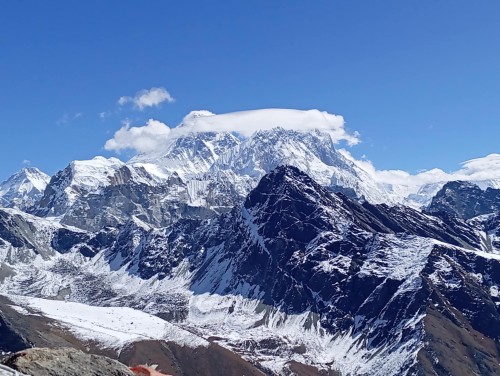
This journey begins with a thrilling flight to Lukla and follows the famous Everest Base Camp trail through vibrant Sherpa villages like Namche Bazaar, Tengboche, and Dingboche. Along the way, you’ll experience rich Himalayan culture, visit ancient monasteries, and enjoy views of some of the world’s highest mountains, including Everest, Lhotse, and Ama Dablam. The trek also includes acclimatization days to prepare your body for high altitude and the upcoming climb.
The highlight of the trip is summiting Island Peak, which requires basic climbing skills such as using crampons, ropes, and ice axes. Before the summit push, you’ll receive proper training at base camp to ensure safety and confidence. From the top, climbers are rewarded with breathtaking views of the Everest region. This 19-day itinerary is designed to balance trekking, acclimatization, and climbing, making it ideal for adventurous trekkers seeking a complete Himalayan experience.
Your Island Peak adventure begins as you arrive at Tribhuvan International Airport in Kathmandu. After landing, you are transferred to your hotel where you can relax and recover from your journey. This day is mainly for rest, but it’s also important for organizing your trekking and climbing gear, especially since Island Peak requires some technical equipment.
Later in the day, you attend a detailed briefing where your guide explains the trekking route, climbing plan, safety procedures, and gear requirements. This session helps you mentally prepare for both trekking and peak climbing, giving you a clear idea of what lies ahead in the Everest region.
You start early with a thrilling mountain flight from Kathmandu to Lukla, one of the most exciting airstrips in the world. During the flight, you get incredible aerial views of hills and snow-capped peaks. After landing, you meet your trekking crew and begin your trek toward Phakding, located at 2,610 meters.
The trail is relatively easy and mostly downhill, following the Dudh Koshi River. You pass through small villages, cross suspension bridges, and walk through pine forests, making it a perfect warm-up day. After a few hours of trekking, you reach Phakding, where you check into a teahouse and relax for the night.
You begin your day in Phakding, following the trail along the Dudh Koshi River and crossing several suspension bridges, including the famous Hillary Bridge. The trail gradually becomes steeper as you approach Namche Bazaar, making this one of the more physically demanding days so far.
After a steady climb through forests and checkpoints, you finally reach Namche Bazaar at 3,440 meters, the main trading hub of the Everest region. This lively Sherpa town is filled with teahouses, shops, bakeries, and stunning mountain views. After checking into your lodge, you can explore the town and enjoy your first real feel of high-altitude Himalayan life.
You spend the day in Namche Bazaar to allow your body to adjust to the altitude. Instead of resting completely, you take a short hike to Everest View Hotel or visit Khumjung village. These hikes help improve acclimatization while offering incredible views of Everest and surrounding peaks.
After the hike, you return to Namche and spend the rest of the day relaxing, exploring local markets, or enjoying a warm meal at a bakery or café. This day is crucial for reducing the risk of altitude sickness and preparing your body for higher elevations ahead.
You leave Namche Bazaar and follow a scenic trail with panoramic views of the Himalayas, including distant glimpses of Everest. The path starts with a relatively flat section before descending to the river and then climbing again through forests toward Tengboche, located at 3,860 meters.
After several hours of trekking, you arrive at Tengboche, home to the famous Tengboche Monastery, the largest monastery in the Khumbu region. You can visit the monastery, observe monks during prayers, and enjoy breathtaking views of surrounding peaks. After checking into your teahouse, you relax and take in the peaceful spiritual atmosphere of this iconic Himalayan location.
You begin your day in Tengboche, descending through rhododendron forests toward the river before starting a steady climb toward Dingboche, located at 4,410 meters. As you move higher, the trees begin to disappear, and the landscape opens into wide alpine terrain with dry, rocky paths and stone-walled fields.
Along the way, you pass villages like Pangboche, where you can see traditional Sherpa houses and monasteries. The air becomes noticeably thinner, so you walk slowly and take regular breaks. After several hours of trekking, you reach Dingboche, a beautiful village surrounded by mountains. You check into a teahouse, rest, and enjoy the incredible views as you begin adjusting to higher altitude.
You stay in Dingboche for an important acclimatization day. Instead of resting completely, you take a short but steady hike to nearby ridges or Nagarjun Hill, which helps your body adapt to the altitude. The climb can feel challenging due to the thin air, but it’s very effective for acclimatization.
From the top, you are rewarded with amazing panoramic views of surrounding Himalayan peaks, glaciers, and valleys. After spending some time at the viewpoint, you descend back to Dingboche and relax for the rest of the day. This day is essential to prepare your body for even higher elevations in the coming days.
You begin your day in Dingboche, trekking toward Lobuche, located at 4,940 meters. The trail gradually ascends through alpine terrain, passing wide valleys and rocky landscapes. As you continue, you walk along glacial moraines, with dramatic views of surrounding peaks and ice formations.
A significant part of the trail includes passing memorial sites dedicated to climbers who lost their lives on Everest, adding a reflective moment to the journey. After 5–6 hours of trekking, you arrive in Lobuche, where you check into a teahouse, rest, and prepare for the next big day.
You start your day in Lobuche, trekking to Gorak Shep, where you leave your bags and continue toward Everest Base Camp, located at 5,364 meters. The trail follows rocky paths and glacier edges, making it one of the most exciting days of the trek.
Reaching Everest Base Camp is a huge achievement, where you stand at the foot of the world’s highest mountain, surrounded by glaciers and towering peaks. After spending time exploring and taking photos, you return to Gorak Shep for the night. The day is long and physically demanding, but incredibly rewarding.
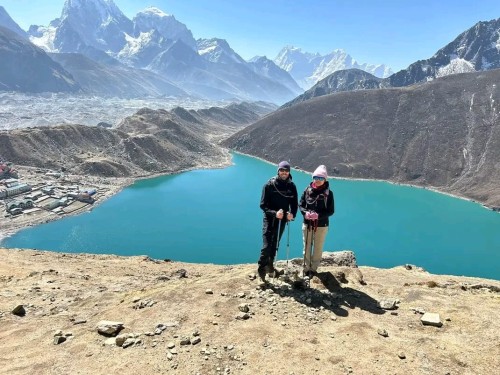
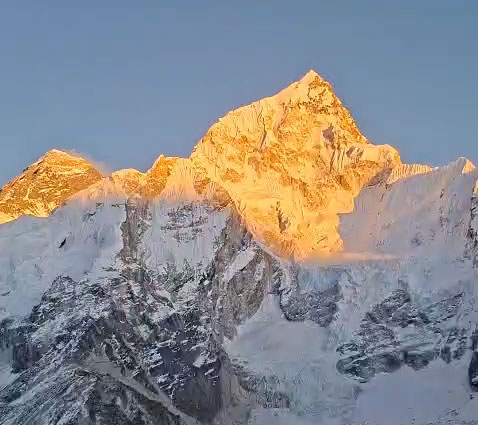
You wake up very early in Gorak Shep and begin a steep hike to Kala Patthar, located at 5,545 meters. This is one of the best viewpoints in the Everest region, offering breathtaking sunrise views over Mount Everest and surrounding peaks. The climb is tough due to altitude, but the view makes it absolutely worth it.
After descending back to Gorak Shep for breakfast, you continue your long descent back to Dingboche. The return journey feels easier as you lose altitude, and you can enjoy better oxygen levels and more comfortable walking conditions.
You begin your day in Dingboche, heading toward Chhukung, located at 4,730 meters. This is a shorter and relatively easier trek compared to previous days, following a gentle trail through the Imja Valley.
As you walk, you are surrounded by towering peaks, glaciers, and wide open landscapes, giving you a true high-altitude Himalayan experience. After a few hours, you arrive in Chhukung, a small settlement that serves as the gateway for Island Peak climbing. Here, you rest, check your climbing gear, and prepare for the upcoming ascent. This day is crucial for transitioning from trekking to the climbing phase of your adventure.
You begin your day in Chhukung, leaving behind the last permanent settlement as you head toward Island Peak Base Camp, located at 5,200 meters. The trail gradually climbs through the Imja Valley, following a rugged and less-traveled path compared to the Everest Base Camp route. The landscape becomes more raw and dramatic, with glacial debris, rocky ridges, and towering peaks surrounding you from all sides.
As you ascend, you can clearly see Island Peak standing ahead, looking like an island in a sea of ice—this is where it gets its name. The trail becomes steeper and more uneven, requiring careful footing as you cross rocky sections and glacial terrain. The air is thin, and every step feels heavier, so you move slowly and take frequent breaks. After 4–5 hours of trekking, you finally reach base camp, a remote and windy campsite set beneath massive हिमालय walls.
At base camp, you settle into tents, have a warm meal, and begin preparing your climbing gear. Your guides will check your equipment—crampons, harness, ropes, ice axe—and give you a briefing about the summit push. The excitement builds as you realize the next stage is not just trekking, but real Himalayan climbing.
You wake up at Island Peak Base Camp, surrounded by ice, rock, and silence, knowing today is all about preparation. Instead of a long trek, this day focuses on building your confidence and skills for the summit. Your climbing guides take you to a nearby training area, usually on a small glacier or icy slope, where you practice essential mountaineering techniques.
You learn how to properly use crampons on your boots, how to walk on ice without slipping, and how to handle an ice axe for balance and safety. The guides also teach you rope techniques—how to clip into fixed lines using a harness and carabiner, and how to ascend using jumars. You practice climbing short icy sections, getting comfortable with the equipment step by step.
This training is crucial, especially if it’s your first time doing a peak climb. By the end of the session, you feel more confident and prepared for the real climb. The rest of the day is spent resting, hydrating, and mentally preparing for the summit push. You’ll go to bed early, knowing you’ll wake up around midnight for the biggest challenge of the entire journey.
This is the biggest and toughest day of your entire adventure. You wake up in the middle of the night at base camp, put on your climbing gear, and begin your ascent toward Island Peak (6,189m) under the stars. The climb starts with a steep rocky trail, gradually leading to snow and ice sections. You move slowly in a line, following your guide, using headlamps to light the path.
As you gain altitude, the climb becomes more technical. You clip into fixed ropes, use your crampons to grip the ice, and carefully make your way upward. The final section is the most challenging—a steep ice wall that requires full focus and effort. Step by step, using your ice axe and rope system, you push toward the summit.
Reaching the top is an unforgettable moment. From the summit, you get breathtaking panoramic views of some of the world’s highest peaks, including Mount Everest, Lhotse, and Ama Dablam. It’s a mix of exhaustion, pride, and pure happiness.
After celebrating briefly, you begin the descent, which is equally demanding. You carefully retrace your steps down the ice and rocky sections, return to base camp for a short rest, and then continue descending all the way back to Chhukung. By the time you arrive, you’re completely exhausted—but you’ve just summited a Himalayan peak.
You wake up in Chhukung, feeling the effects of the previous day, but also a huge sense of accomplishment. Today’s trek is all about descending and recovering as you head toward Pangboche, located at 3,985 meters.
The trail leads you back through Dingboche and down into greener landscapes, where oxygen levels improve and walking becomes noticeably easier. You pass stone-walled fields, small villages, and yak pastures, gradually leaving the harsh alpine environment behind. After several hours of trekking, you arrive in Pangboche, a traditional Sherpa village with monasteries and stunning mountain views.
Here, you can finally relax properly, enjoy better food, and reflect on your summit achievement in a more comfortable setting.
You begin your day in Pangboche, retracing your route back toward Namche Bazaar, located at 3,440 meters. The trail takes you through Tengboche, where you may stop again at the monastery, and then descends through beautiful rhododendron forests.
You cross suspension bridges over the Dudh Koshi River and pass through familiar villages, but now everything feels easier as you descend and gain more oxygen. The body feels stronger, and the walking pace improves.
After several hours, you arrive back in Namche Bazaar, where you can enjoy proper bakeries, cafés, and even hot showers. This feels like a return to civilization after days in extreme conditions. You celebrate your successful climb, relax, and enjoy the lively atmosphere of the Everest region’s main hub.
You begin your final trekking day in Namche Bazaar, heading back toward Lukla, located at 2,840 meters. The trail retraces the familiar path along the Dudh Koshi River, crossing suspension bridges, passing through pine forests, and walking through lively Sherpa villages like Phakding.
The journey feels very different now—what once felt challenging now feels much easier as you descend and enjoy the extra oxygen. You walk with a relaxed pace, soaking in the last views of the Himalayas, prayer flags, and mountain landscapes that have been part of your journey for days.
After several hours of trekking, you arrive in Lukla, where your adventure first began. This is a special moment—you celebrate with your guides and porters, thanking them for their support throughout the trek and climb. In the evening, you enjoy a final dinner together, sharing stories, laughs, and memories of summiting Island Peak. It’s a well-deserved celebration after completing such a challenging adventure.
You wake up early in Lukla and head to the airport for your return flight to Kathmandu. The short but scenic flight gives you one last aerial view of the mountains, valleys, and trails you’ve just explored on foot.
Upon arrival in Kathmandu, you are transferred back to your hotel. After days of trekking and climbing, this feels like a big return to comfort—hot showers, soft beds, and a variety of food options. You can spend the rest of the day relaxing, exploring the city, or even celebrating your successful climb with your team.
On your final day, you transfer to Tribhuvan International Airport for your onward journey. As you leave Nepal, you carry unforgettable memories of trekking through the Everest region, standing at Everest Base Camp, and successfully summiting Island Peak.
This journey is more than just a trek—it’s a personal achievement that combines adventure, endurance, and cultural experience. From peaceful villages to high हिमालय peaks, every step has been part of an incredible story that you’ll carry with you long after you leave.
Not necessarily, but basic mountaineering skills are highly recommended. Before the summit attempt, climbers receive training on using ropes, crampons, and ice axes. With proper guidance from experienced climbing guides, even beginners with good fitness can successfully summit Island Peak.
Island Peak is considered a moderate to challenging climb. The trekking portion is manageable, but the summit day is physically demanding and involves glacier crossing, steep snow slopes, and fixed rope sections. Good preparation and acclimatization are key to success.
The success rate is relatively high compared to other peaks, especially with proper acclimatization and guidance. Weather conditions, physical fitness, and mental preparation play a crucial role in reaching the summit.
The highest point is the summit of Island Peak at 6,189 meters. This altitude requires proper acclimatization, and climbers may experience altitude-related symptoms if not properly prepared.
Yes, travel insurance is mandatory for Island Peak Climbing. It must cover high-altitude trekking and emergency evacuation, including helicopter rescue if needed. This ensures safety in case of unforeseen situations.
Everest Base Camp Trek ranks among the most famous trekking adventures in Nepal. ...
Everest View Trek offers Himalayan views of Mount Everest, Namche Bazaar, and Te ...